

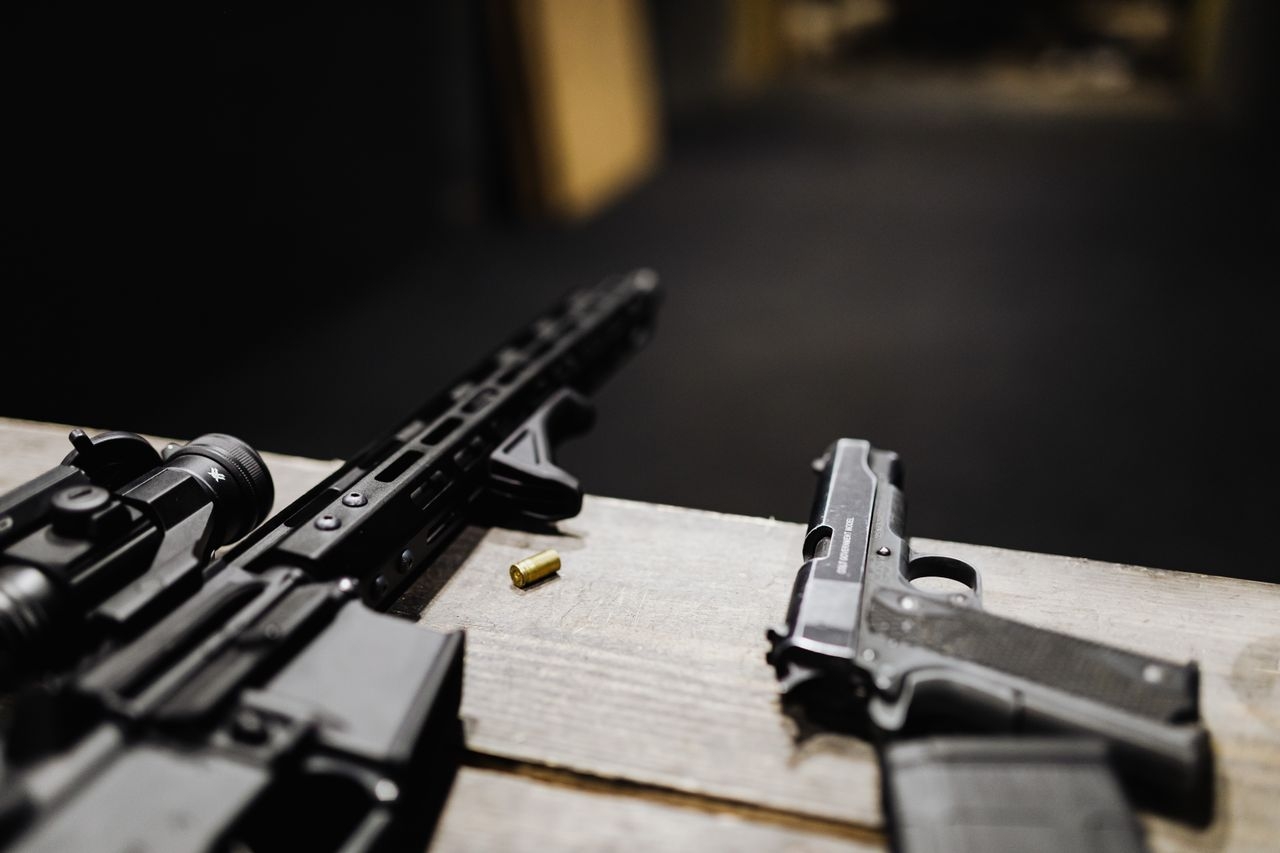
Police found a firearm, and now your criminal record is suddenly part of the case.
Maybe the gun was never fired. Maybe no one says you threatened anyone with it. It might not even have belonged to you. Still, police are telling you that an older conviction means you were not legally allowed to possess or control a firearm in the first place.
That is the issue behind a Pennsylvania charge commonly referred to as “person not to possess.”
Under Pennsylvania law, certain prior convictions and other circumstances identified by statute can prohibit a person from possessing or controlling a firearm. A case under this law is different from a charge based on carrying a firearm without a license. The central questions can include why you were allegedly prohibited, whether the prior conviction actually qualifies, and whether the Commonwealth can prove that you possessed or controlled the gun.
If you are facing this type of firearm charge in Luzerne County or elsewhere in Northeastern Pennsylvania, understanding those distinctions can help you make sense of why an old case is affecting you now.
What Does “Person Not to Possess” Mean in Pennsylvania?
Pennsylvania's prohibited-person firearm law is found at 18 Pa.C.S. § 6105. The statute prohibits firearm possession and certain other firearm-related conduct by people who fall within specific categories, including those convicted of particular listed offenses and people prohibited for other reasons identified by law.
That is more precise than simply saying that “felons cannot have guns.” Not every criminal conviction creates the same firearm prohibition, and § 6105 reaches some circumstances beyond prior felony convictions.
For someone who believed an old conviction was behind them, learning that it now forms the basis of a serious firearm charge can be difficult to understand. In a § 6105 case, however, the prior record is not merely background information. It can be part of what the Commonwealth relies on to establish that firearm possession was prohibited.
Does Every Prior Conviction Prohibit You From Possessing a Firearm?
No. Having a criminal record does not automatically mean that every conviction creates a firearm prohibition under § 6105.
The statute specifically identifies offenses that can trigger the prohibition, including crimes such as aggravated assault, certain sexual offenses, burglary, robbery, and other listed offenses. It also covers certain qualifying drug convictions and additional circumstances identified elsewhere in the law.
That makes the underlying record an important part of the case.
The exact conviction, its grading, the jurisdiction where it occurred, and the disposition can all matter when determining whether § 6105 applies. That means it is important to look closely at the actual record rather than simply assuming that any felony or old criminal record creates the same firearm prohibition.
The question is whether the conviction or other claimed basis for the prohibition actually falls within the law being used against you.
Can You Be Charged If the Gun Was Not Yours?
Ownership and possession are not the same thing.
The Commonwealth does not necessarily have to prove that you bought the firearm or considered yourself its owner. The issue can instead be whether you actually possessed the gun or exercised control over it.
Actual possession is relatively straightforward when the firearm is physically on a person. More difficult cases can involve what Pennsylvania courts call constructive possession.
Constructive possession generally requires evidence that a person had both the power to control the firearm and the intent to exercise that control. Pennsylvania courts also recognize joint constructive possession, so another person's access to the firearm does not automatically resolve the issue.
This becomes especially important when a gun is found somewhere other than directly on you.
What If the Gun Was in a Shared Car or Home and You Did Not Know It Was There?
A firearm found under a seat, inside a bag, in a bedroom, or somewhere in a home occupied by several people can raise questions about who knew it was there and who actually exercised control over it.
Simply being near a firearm does not automatically establish constructive possession. At the same time, another person's ownership or access to the gun does not necessarily prevent the Commonwealth from arguing that you also possessed or controlled it.
The surrounding facts become important. Depending on the case, prosecutors can point to where the firearm was located, who had access to that area, statements about the gun, personal belongings found nearby, forensic evidence when available, and what officers observed before or during the encounter.
If you did not know the firearm was present, the evidence concerning your awareness and alleged control deserves careful review. The question is not simply whose gun it was. It is whether the Commonwealth can prove the connection to the firearm required for possession.
At Muckler Law, LLC, we look closely at those details because the location of a gun is only part of the issue. How the Commonwealth connects the firearm to you can be just as important.
Why Can You Face a Felony If You Never Used the Gun?
A person-not-to-possess case does not require an allegation that you fired the firearm or used it to threaten someone.
When the prohibition is based on certain qualifying felony convictions, a violation of § 6105 can itself be graded as a felony. The precise grading depends on the conviction underlying the firearm prohibition and other circumstances identified in the statute, with § 6105 providing for second-degree felony charges in some cases and first-degree felony charges in specified circumstances.
That is why this should not be confused with a simple licensing issue.
Pennsylvania separately prohibits carrying certain firearms without a license under § 6106. A § 6105 prosecution addresses a different question: whether you were legally prohibited from possessing or controlling the firearm at all.
Checking the statute cited on your criminal complaint can therefore help identify whether prosecutors are alleging prohibited possession under § 6105, carrying without a license under § 6106, or more than one firearm offense.
What Records and Evidence Matter in a § 6105 Case?
Reviewing a § 6105 charge usually requires answering two separate questions.
First, what is the legal basis for claiming you were prohibited from possessing a firearm?
That can require reviewing the criminal complaint, the specific § 6105 subsection cited, certified conviction records, sentencing or disposition documents, and records from another state or federal court if the prior conviction occurred outside Pennsylvania.
Second, what evidence allegedly connects you to the firearm?
That can include police reports, body-camera footage, photographs, surveillance video, statements, forensic evidence, vehicle or property records, and evidence showing where the firearm was located and who had access to it.
Both questions matter.
To obtain a conviction, the Commonwealth must establish that § 6105 prohibited you from possessing the firearm and that you engaged in possession or control required by the charge.
Facing a Person-Not-to-Possess Charge in Northeastern Pennsylvania? Talk With Muckler Law
Being told that an old conviction now exposes you to a serious firearm charge can raise immediate questions about your freedom, your record, your family, and what happens next.
You may be wondering why the gun's ownership does not end the issue, whether your prior conviction actually prohibits firearm possession, or how prosecutors can claim you controlled a weapon that was found somewhere other than on you.
At Muckler Law, LLC, we represent people facing serious weapons charges in Luzerne County and throughout Northeastern Pennsylvania. We examine the statutory basis for the alleged prohibition, the records the Commonwealth is relying on, and the evidence used to connect our client to the firearm.
If you have been charged as a person not to possess a firearm in Pennsylvania, contact Muckler Law to discuss the charge, the prior conviction at issue, and the evidence that can affect how your case moves forward.
Disclaimer: Results may vary depending on your particular facts and legal circumstances. The articles on this blog are for informational purposes only and are no substitute for legal advice or an attorney-client relationship. If you are seeking legal advice, please contact our law firm directly.