

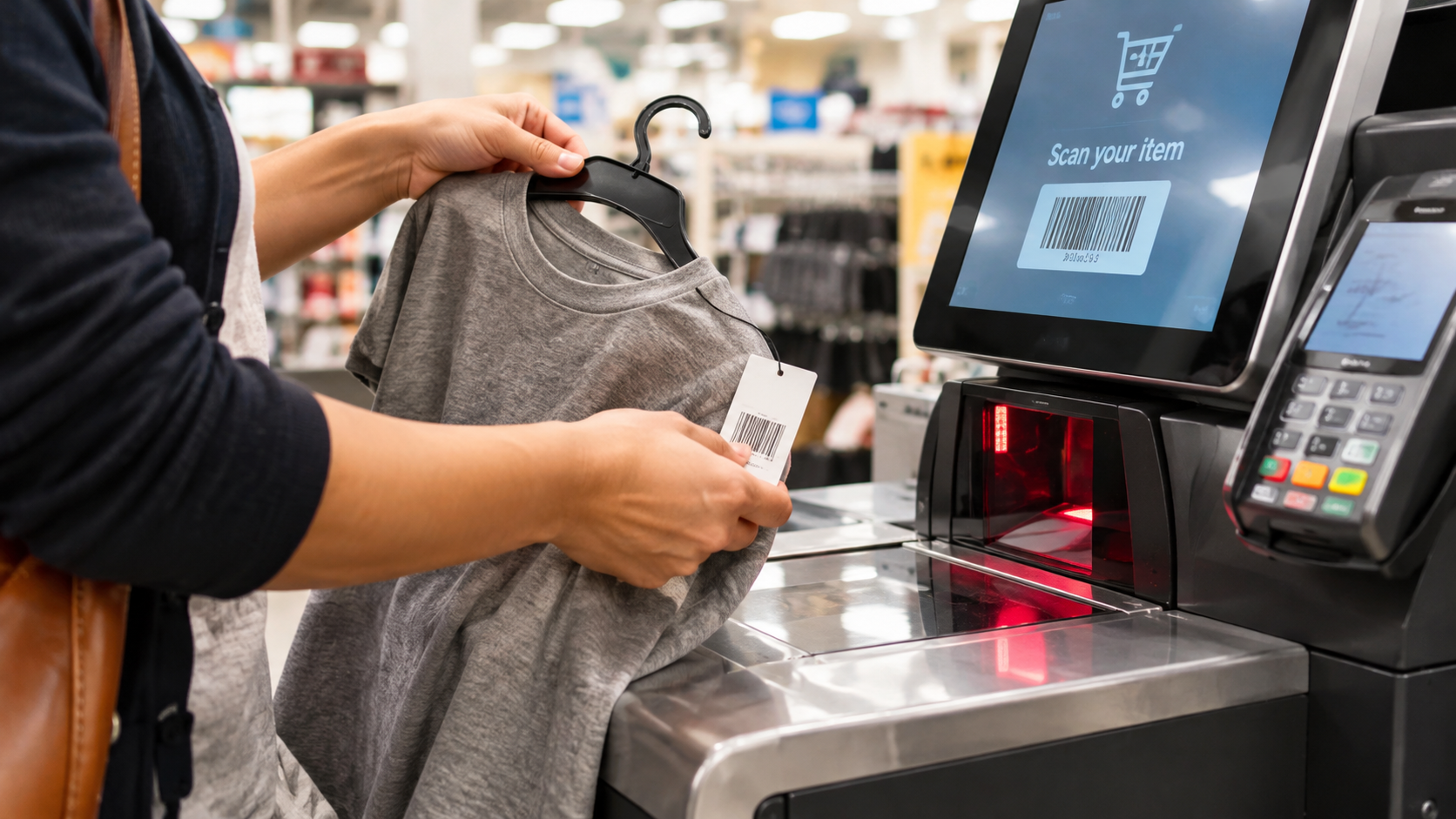
You finish scanning your groceries, pay, and head toward the exit. Before you leave, a store employee stops you and claims that an item was never scanned. You thought you had paid for everything, but now you're being accused of shoplifting.
Maybe an item didn't register when you passed it over the scanner. Maybe you selected the wrong produce code or overlooked something in your cart. Either way, you're now facing questions about whether the missed payment was intentional.
In Pennsylvania, a self-checkout mistake does not automatically mean you committed retail theft. The circumstances matter, particularly whether the evidence shows that you intentionally avoided paying for merchandise.
If you're facing a retail theft accusation, understanding what the law requires and how a disputed checkout transaction is evaluated can help you make sense of the situation.
Can You Be Charged With Shoplifting for Missing an Item at Self-Checkout?
Yes. A missed scan or unpaid item can lead to a shoplifting accusation and a criminal investigation.
Pennsylvania addresses shoplifting under 18 Pa.C.S. § 3929, the state's retail theft statute.
The law covers several types of conduct, including taking merchandise with the intent to deprive the store of it without paying the full retail price, and intentionally causing a register to record less than the merchandise's full value.
But finding an unpaid item in someone's cart does not automatically establish that the person intended to avoid payment. The evidence must support the requirements of the particular retail theft charge.
Does Pennsylvania Law Require Intent for Retail Theft?
Yes. Pennsylvania's retail theft statute requires proof of the intent specified for the particular offense. At self-checkout, that distinction matters when someone is accused of deliberately paying less than the correct price or leaving merchandise out of a transaction.
Under-ringing means causing a register or another sales-recording device to record less than the merchandise's full retail value.
An incorrect scan alone does not establish whether you intended to avoid paying the full price.
A customer who accidentally selects the wrong produce code is in a different situation from someone who deliberately enters a lower-priced code to avoid paying the correct amount.
Prosecutors must establish the elements of the particular retail theft charge. A shopper's explanation matters, but it must be considered alongside the available evidence, including any conduct that may suggest an intent to avoid payment.
What if the Self-Checkout Mistake Was Accidental?
If you overlooked an item or entered the wrong product code, the details of that mistake matter.
Consider a customer who scans several identical products and believes each one registered. The receipt later shows that fewer items were charged. Whether the customer noticed an error, attempted to correct it, or continued checking out without realizing what happened can become important when evaluating the allegation.
The situation differs from an accusation that someone deliberately bypassed the scanner or selected lower-priced items to reduce the total.
The challenge is determining what actually happened during the transaction. Details that seem minor, such as whether the scanner registered an item or displayed an error, may help explain how the discrepancy occurred.
Can Store Surveillance or Self-Checkout Records Prove Shoplifting?
Surveillance footage, receipts, and checkout records can be important evidence, but each provides only part of the picture.
A store may have video showing how merchandise moved through the checkout area, along with electronic records of scanned items, selected product codes, and the total amount charged.
Investigators may compare those records to the merchandise involved in the alleged incident.
For example, video might show a customer placing an item into a bag without a corresponding purchase appearing on the receipt.
That evidence may support an allegation that the item was not paid for. Whether it establishes intentional retail theft depends on what the footage, transaction records, and other circumstances actually show.
A video angle might not clearly capture a scanner display. A transaction record may establish that an incorrect price was entered without explaining why it happened.
These distinctions are important because evidence that a checkout transaction was incorrect is not necessarily proof that the customer intended to avoid payment.
What Happens if Store Security Stops You After Self-Checkout?
A retail theft allegation can begin before the customer even leaves the store.
Pennsylvania law allows store employees and certain other authorized individuals to detain someone when they have probable cause to believe retail theft has occurred or is occurring and that the person detained is responsible. The detention must be reasonable in both its manner and duration.
A qualifying detention may occur on or off store premises for purposes such as verifying identification, checking for unpaid merchandise, recovering that merchandise, or contacting law enforcement.
That does not mean every store detention is automatically lawful or that a store employee has unlimited authority.
If you're stopped over a disputed self-checkout transaction, avoid turning the encounter into an argument or physical confrontation. Statements made during the interaction can become part of the investigation.
Police involvement also does not automatically mean the State has proved a retail theft offense.
Can a Self-Checkout Retail Theft Charge Become a Misdemeanor or Felony?
Yes. Pennsylvania grades retail theft offenses according to factors that include the value of the merchandise and the person's qualifying history of retail theft offenses.
For example, a first offense involving merchandise worth less than $150 is generally a summary offense. A second offense involving less than $150 is a second-degree misdemeanor. When the merchandise is worth $150 or more, a first or second offense is generally a first-degree misdemeanor.
A third or subsequent offense can be a third-degree felony regardless of the merchandise's value. The statute also provides felony grading for certain other circumstances, including merchandise valued at more than $1,000.
Pennsylvania also has specific rules for counting prior offenses, including certain cases resolved without a conviction, and for combining merchandise values when multiple thefts are part of the same scheme or course of conduct.
These classifications matter even when an allegation begins with what appears to be a minor checkout discrepancy.
An accusation does not establish guilt, and the appropriate charge depends on the specific facts and applicable statutory requirements.
What Should You Do if You're Accused of Shoplifting at Self-Checkout?
If store security has stopped you, police have contacted you, or you've received a retail theft citation, there are practical steps to consider.
- Keep your receipt and transaction information. Your receipt, payment records, and any related purchase information may help establish what the register actually charged.
- Do not alter or delete relevant records. Messages, payment confirmations, and other information connected to the transaction may become important.
- Avoid contacting store employees to argue about the allegation. Additional statements or confrontations can complicate an already disputed situation.
- Seek legal advice before discussing the accusation with investigators. An attorney can review the allegations, explain your rights, and help identify which evidence matters.
At Muckler Law, LLC, we understand that a disputed checkout transaction involves more than an unpaid item on a receipt. Attorney Matthew Muckler, a former Luzerne County Assistant District Attorney, helps clients examine the circumstances behind retail theft allegations and understand the evidence involved in their cases.
Accused of Retail Theft in Northeastern Pennsylvania? Contact Muckler Law
If a self-checkout transaction has led to a retail theft accusation, the details of what happened at the register can become important when determining how to respond.
At Muckler Law, LLC, we represent individuals facing retail theft and other criminal charges throughout Northeastern Pennsylvania, including Wilkes-Barre, Scranton, Luzerne County, and Lackawanna County. We help clients understand the charges they face and their legal options.
If you're accused of shoplifting at self-checkout, contact Muckler Law, LLC to discuss your situation and how our firm may assist with your defense.
Disclaimer: This article provides general information and is not legal advice. Pennsylvania retail theft law applies differently depending on the circumstances of each case. Reading this article does not establish an attorney-client relationship. Consult an attorney for advice about your situation.